
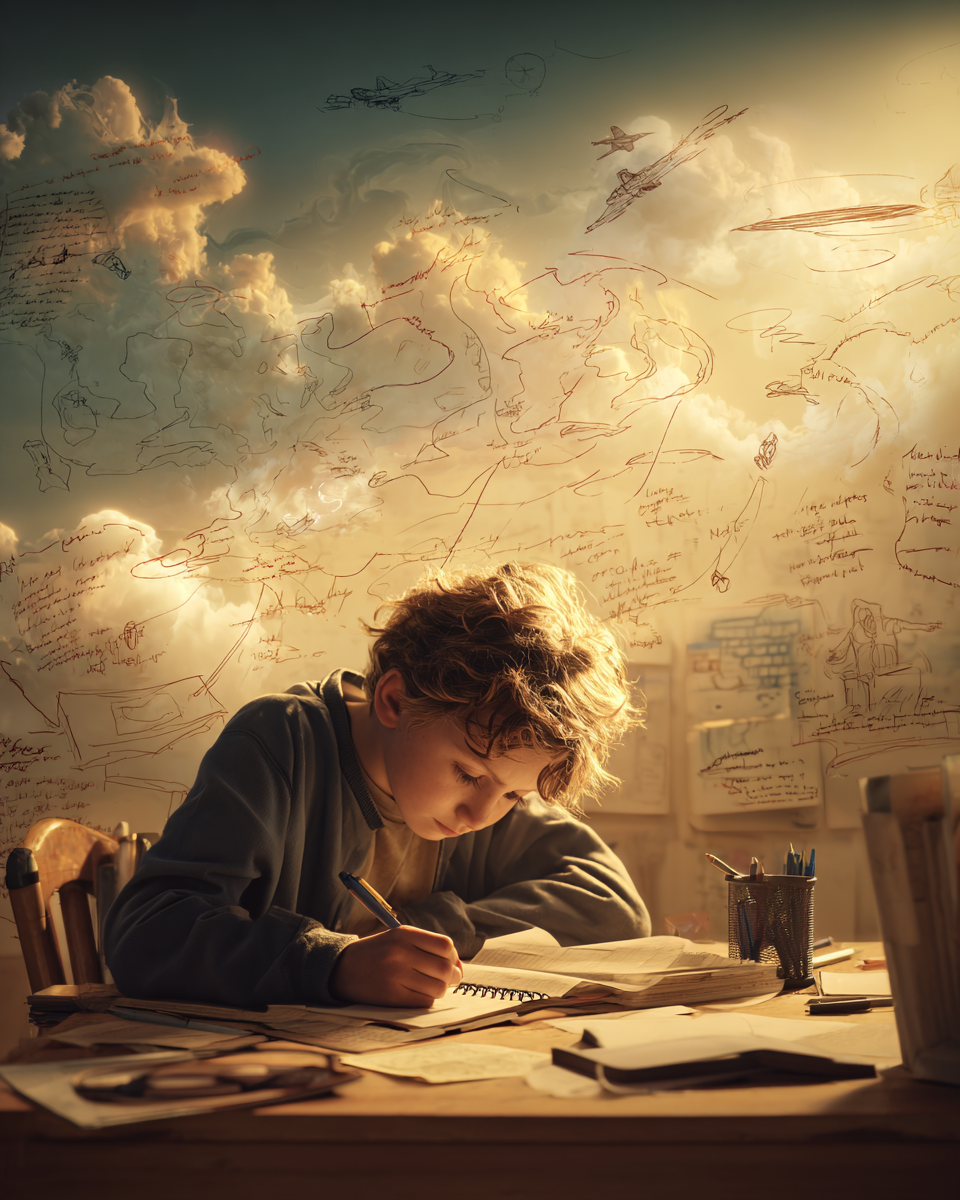
One thing many parents notice pretty quickly is that their children often work much harder on things that feel meaningful to them.
A child who struggles to stay focused on an assignment may suddenly spend an hour building an imaginary world, explaining a complicated game strategy, sketching characters, talking about an invention, or describing an adventure story in incredible detail. Parents see this kind of thing all the time. The focus, energy, and enthusiasm are clearly there when the activity feels personal and important.
Writing is the same way.
Sometimes the struggle is not really with writing itself. The struggle is with writing that feels disconnected from meaning.
When children are asked to complete an assignment they did not choose and do not emotionally connect with, the goal naturally becomes “finish the work.” They focus on getting through it, avoiding mistakes, or completing the minimum requirement. Even students with vivid imaginations can become hesitant when writing feels like a disconnected academic task instead of meaningful communication.
But something changes when the story belongs to them.
When students begin creating their own characters, worlds, mysteries, inventions, adventures, or conflicts, writing suddenly has a purpose they can feel. Description matters because they want the scene to come alive. Dialogue matters because they want the characters to sound believable. Revision matters because they want the story itself to become stronger.
The writing skills are no longer floating separately from meaning. They become tools for expressing something the student genuinely cares about.
That shift is powerful.
It is one reason fiction writing can become such a meaningful language arts experience. Stories naturally bring together communication, sequencing, vocabulary, grammar, structure, creativity, and critical thinking in one connected process. Students are not simply practicing isolated exercises. They are building something.
And when children feel ownership, effort often changes naturally.
Most children are already willing to invest tremendous energy into things that matter to them personally. They redesign game worlds, improve drawings, memorize details about favorite topics, retell stories, invent new ideas, and revise creations they care about without anyone forcing them to do it.
Storytelling can tap into that same kind of motivation.
For homeschool families, this creates a wonderful opportunity. Writing does not have to revolve around reluctant participation or disconnected exercises. It can become a meaningful process of creativity, communication, and growth.
That does not make the learning less rigorous. Students still learn grammar, structure, organization, revision, and clear communication. In many cases, though, they become far more willing to practice those skills because they understand why the skills matter.
Children work harder when the story belongs to them.
And meaningful storytelling gives them something worth caring about.
If you would like to explore how our courses help students develop writing, communication, and critical thinking skills through meaningful storytelling, see our fuller description:
0 Comments