
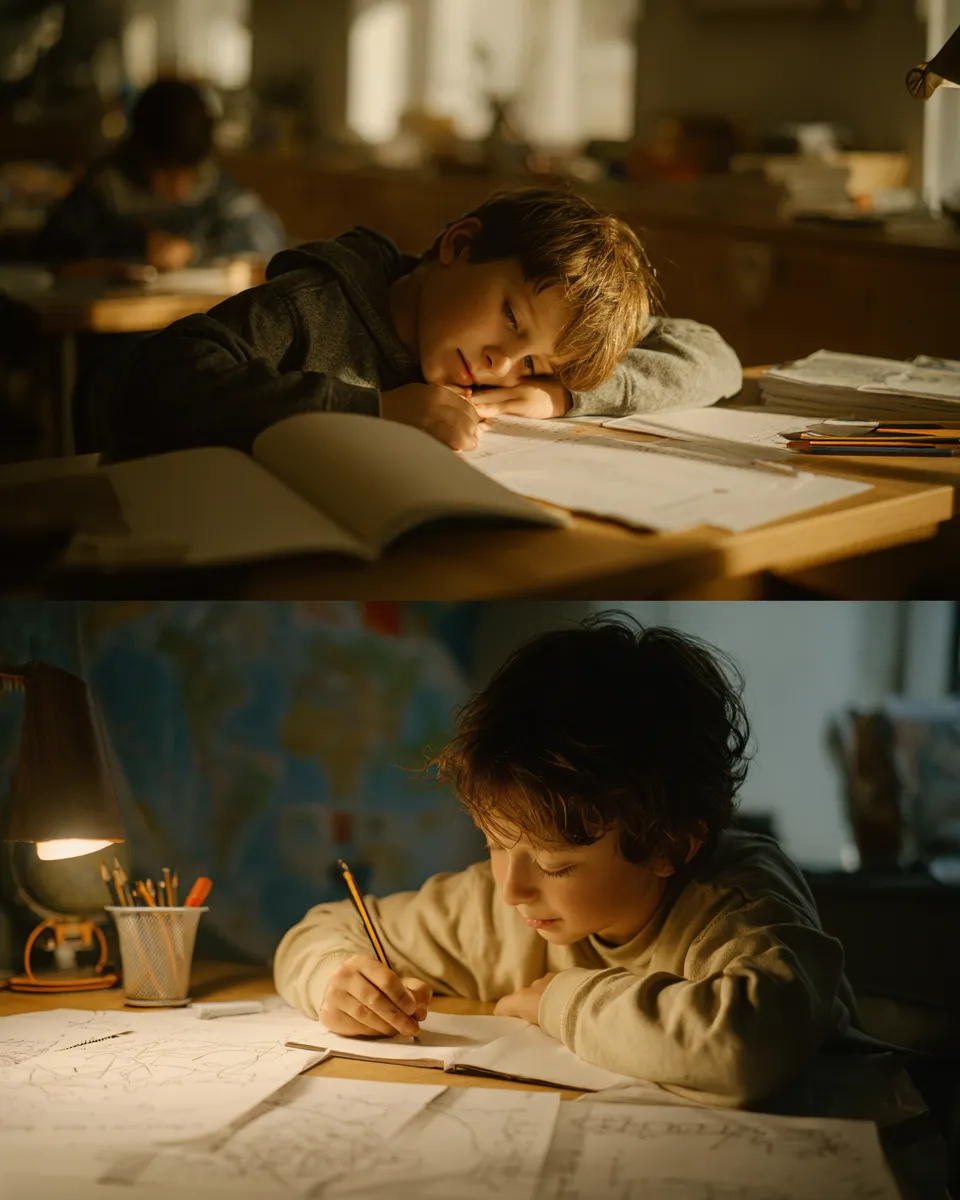
Many children who resist writing assignments are not actually resisting creativity or communication. More often, they are struggling with writing that feels disconnected from meaning.
Parents see this all the time. A child stares blankly at a worksheet, struggles to finish a paragraph assignment, or becomes frustrated over grammar practice. Writing begins to feel heavy, forced, and emotionally draining for everyone involved. Over time, it can slowly create the impression that the child simply is not interested in writing or language arts.
And yet those same children often come alive in completely different situations.
A child who resists a writing exercise may spend an hour enthusiastically explaining the plot of a movie, describing a strategy from a game, inventing imaginary worlds, or telling elaborate stories at the dinner table. He may eagerly describe characters, conflicts, inventions, mysteries, adventures, or entire scenes that exist only in his imagination.
That contrast matters because it reveals something many parents instinctively recognize: the struggle is not always with writing itself. Often, the struggle is with writing that feels disconnected from anything meaningful to the child.
Many traditional writing assignments ask students to practice skills before they emotionally care about what they are creating. The focus naturally falls on rules, structure, corrections, and performance. Those skills certainly matter, but when the assignment itself feels disconnected from purpose, many children struggle to stay motivated long enough to develop confidence.
Storytelling changes that dynamic completely.
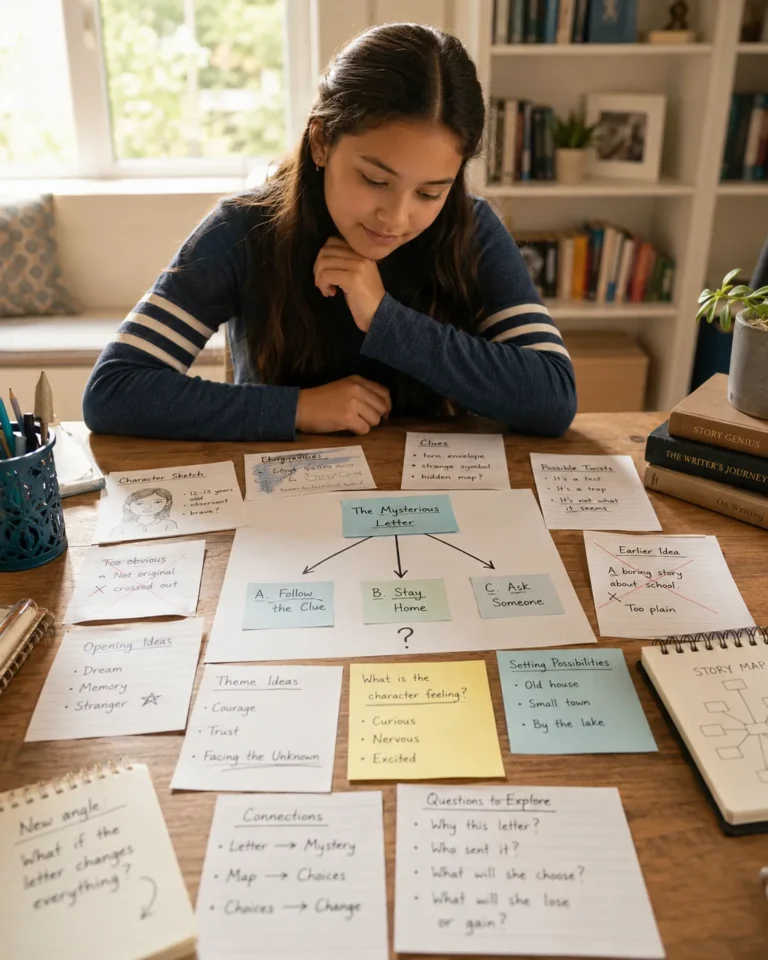
When students begin creating their own stories, writing suddenly has meaning. Punctuation matters because they want readers to understand the dialogue correctly. Description matters because they want the setting to feel real. Revision matters because they want the story itself to become stronger. Grammar becomes connected to communication instead of existing as an isolated academic exercise.
In that environment, language arts skills stop feeling abstract. They become tools that help students express ideas they genuinely care about.
This is one reason fiction writing can become such a powerful educational experience. Stories naturally combine communication, sequencing, vocabulary, structure, creativity, and critical thinking into one meaningful process. Students are not simply “learning to write stories.” They are learning how ideas connect, how decisions create consequences, how emotions affect communication, and how to organize thoughts clearly enough for another person to understand them.
Most importantly, many students begin working far harder because the story belongs to them.
That sense of ownership changes everything. Children often put far more energy into improving something that feels personal and meaningful than something that feels disconnected and externally assigned.
For homeschool parents, this creates an incredible opportunity. Writing does not have to become a daily struggle built around reluctant participation. It can become a process of discovery, creativity, communication, and meaningful skill development.
That does not make the learning less rigorous. In many cases, it makes students far more willing to practice the very skills traditional writing programs struggle to motivate.
Children often work harder when the writing matters to them. Meaningful stories give them a reason to care.
If you would like to see how our courses help students develop writing, communication, and critical thinking skills through meaningful storytelling, we discuss it further here:

0 Comments