
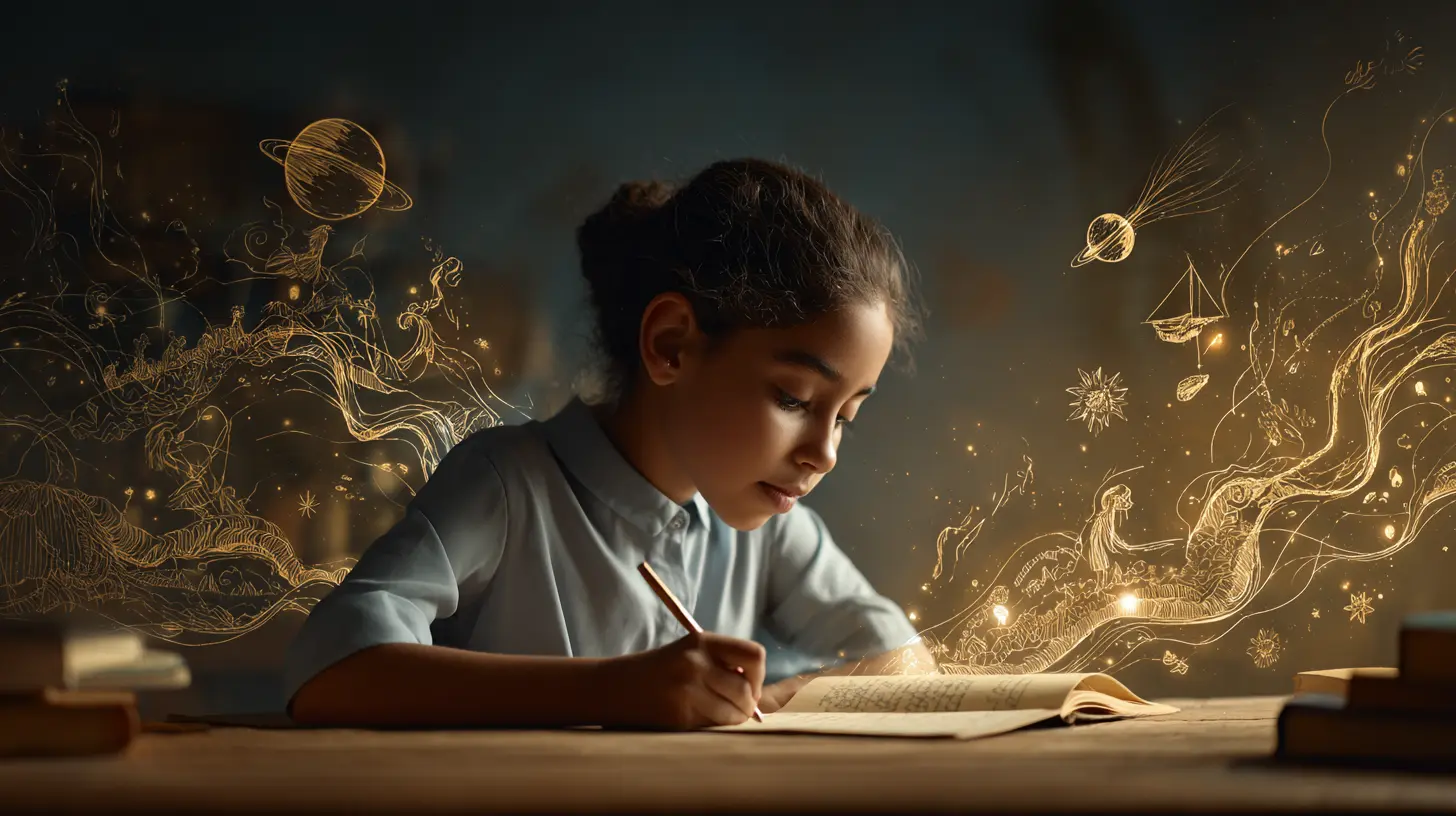
Every child carries stories inside them.
Not assignments.
Not exercises.
Stories.
They show up in daydreams, in half-finished conversations, in imaginary worlds that feel more real than the room they’re sitting in. Fiction writing is not about adding creativity to a child—it’s about giving that creativity a way out.
When students write fiction, something powerful happens. They stop trying to produce “the right answer” and start exploring ideas, emotions, possibilities, and meaning. Writing becomes less about rules and more about expression. Less about performance and more about discovery.
Creativity Isn’t a Talent—It’s a Capacity
Many students believe creativity is something you either have or you don’t. Fiction quietly dismantles that idea.
Creativity grows through use. When a student invents a character, imagines a setting, or asks “what if?”, they’re practicing flexible thinking. They’re learning to connect ideas, to see alternatives, and to explore outcomes that don’t yet exist.
That kind of thinking doesn’t stay on the page. It shows up in problem-solving, empathy, communication, and confidence.
Imagination Is How Students Make Sense of the World
Imagination isn’t escapism—it’s interpretation.
Through stories, students explore fears safely, test courage without risk, and experiment with choices without consequences. A fictional world gives them enough distance to think deeply and enough freedom to be honest.
When a student writes fiction, they aren’t just making something up. They’re processing experiences, asking questions, and shaping meaning in a way that feels natural to them.
Why Fiction Unlocks Expression
Fiction gives students permission.
Permission to explore big ideas without having all the answers.
Permission to write messy first drafts.
Permission to try, fail, revise, and try again.
Because fiction doesn’t demand perfection—it invites curiosity.
And once students realize their ideas matter, motivation follows. Grammar, structure, and clarity suddenly have a purpose: they help the story reach someone else.
This Is Just the Beginning
This post is only an introduction. Creativity and imagination in fiction run deep—into character design, world-building, emotional truth, and meaningful themes. We’ll explore those in much greater detail in an upcoming series.
For now, it’s enough to remember:
Stories don’t teach students to escape the world.
They teach students how to engage with it more fully.

0 Comments